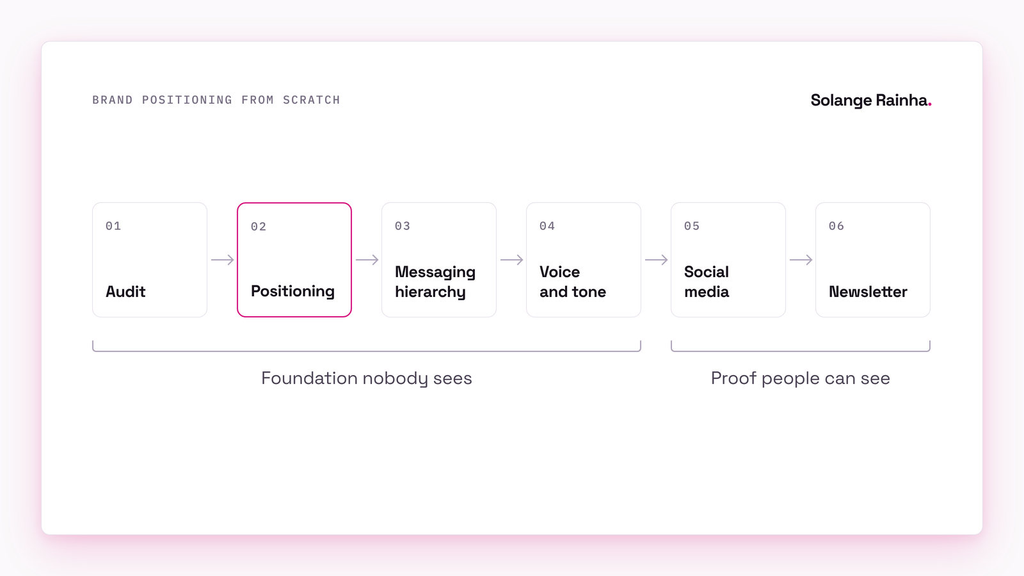
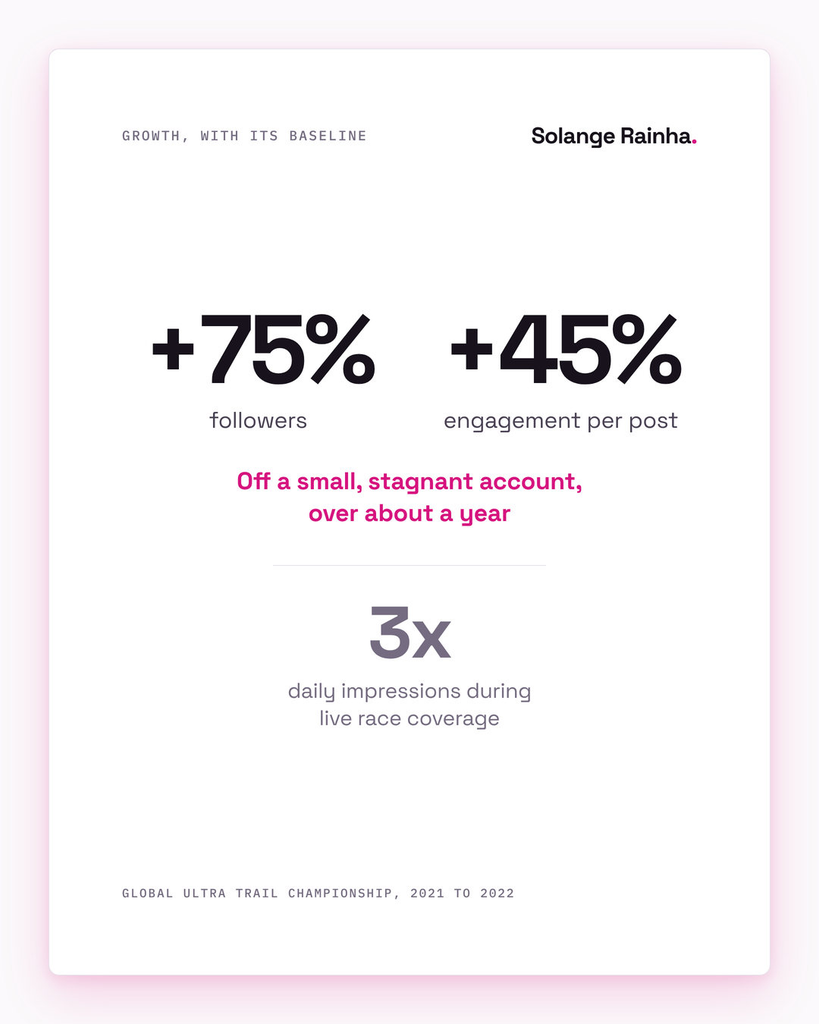
Building brand positioning from scratch means defining who a company is for, what it promises and how it sounds before you produce anything, because there’s no existing brand to refresh. I did it for a global ultra trail running championship whose brand existed in name only: a two-week audit first, then positioning, messaging and voice in that order, then social media as the fastest visible proof the brand was alive, then a newsletter to deepen it. Followers grew 75% and engagement per post 45% over about a year, off a small base, which is why the baseline gets as much space here as the growth.
Building brand positioning from scratch is a different job from a brand refresh, and the order you do it in decides whether it holds. Plenty of job ads say “we need someone to refresh our brand”, and half the time, once you’re inside, there’s nothing to refresh: a logo, a name, a website listing what the company does, and a social account that posts when someone remembers it exists. Positioning, voice and any reason for anyone to care are all missing, and the brand exists as a legal entity and a colour palette, and that’s about it.
I walked into exactly that at an endurance sports organisation running a global ultra trail running championship across more than five countries. My title was Marketing Manager and I was the sole marketing lead, which sounded established; what I inherited was a logo with nothing behind it. Over about a year I built the whole brand (positioning, messaging, voice, social strategy, a content pipeline, a newsletter), and by the time I left, followers were up 75% and engagement per post up 45%. Those figures need context to mean anything, so they get it below.
What’s the difference between a brand refresh and building brand positioning from scratch?
A refresh updates an identity that already works on some level, while building from scratch means deciding what the company stands for before anything you make can hold together. In a refresh people already recognise the positioning and the job is to sharpen or modernise it, while from scratch there’s no coherent identity to start from, so you’re defining who it’s for, what it offers and how it sounds first. Job ads give both jobs the same name, and in practice they couldn’t be further apart:
| Brand refresh | Building from scratch | |
|---|---|---|
| Starting point | A brand that works on some level | A name, a logo and not much else |
| First job | Decide what to keep and what to sharpen | Decide what the company stands for and who it’s for |
| What you fight | Legacy, and attachment to “how we’ve always done it” | The urge to start posting before there’s anything to say |
| Where the risk sits | The transition, while old and new overlap | Building a pile of content on no foundation |
A refresh has something to react against, which is the transition-heavy work I wrote about in content marketing through a rebrand, and building from scratch has no foundation, which sounds harder and in some ways is, but it also means no legacy to fight and no sacred cows.
The trap is treating a from-scratch job like a refresh: you start posting and filling the calendar, and you build a pile of content on a foundation that doesn’t exist. Six months later you have more stuff and still no brand, because nothing underneath ties the work together. I’ve watched people do it, and it’s the fastest way to be busy and invisible at once.
What does a first-two-weeks brand audit look at?
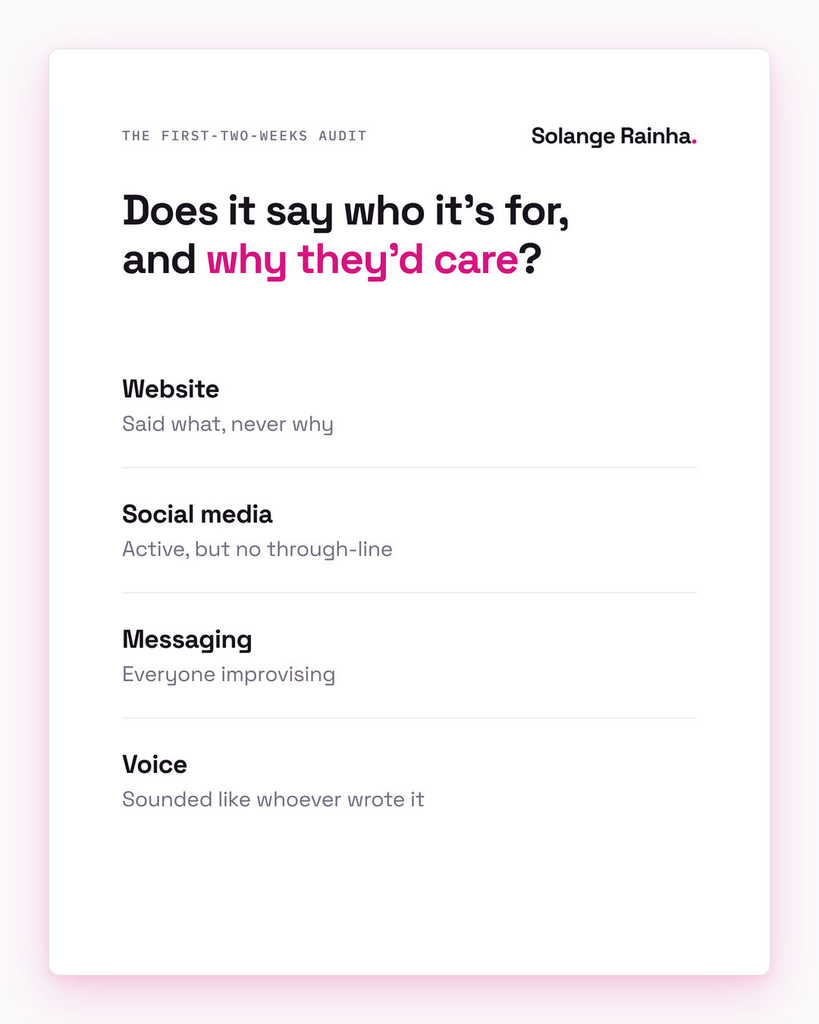
The website, social, messaging and voice, each checked against one question: does it say who this is for and why they should care? I spent my first two weeks on it before producing anything, because you can’t build positioning until you know exactly how broken the current state is. Here’s what turned up:
- The website described the organisation in flat, functional terms: dates, locations, logistics, and nothing about why any of it was worth a runner’s time, who it was for, or what made this championship different from any other race series. It answered “what” and ignored “why should you care”.
- Social media was technically active and functionally dead. Posts went up irregularly with no through-line and no consistent voice, and engagement was close to nonexistent, which makes it the easiest possible starting point, because there’s nowhere to go but up.
- Messaging didn’t exist. Every piece of material described the organisation differently, because nobody had decided what the core promise was, so everyone improvised and the improvisations didn’t agree.
- And voice didn’t exist as a defined standard. The copy sounded like whoever wrote it that day, which meant it sounded like nobody.
The audit gave me what I needed, which was a clear map of the gap between what the brand was and what it had to become.
In what order do you build positioning, messaging and voice?
Positioning first, then the messaging hierarchy, then voice and tone, because each layer depends on the one beneath it. Write voice guidelines before positioning is settled and you get a style with nothing underneath it.
Positioning came first. April Dunford’s definition in her quickstart guide to positioning is the one I’d hand anyone: it defines how you’re “a leader at delivering something” that “a well-defined set of customers cares a lot about”. For this organisation that meant getting specific about the kind of runner and supporter the championship was for, and what the experience promised that a generic race calendar didn’t. Until that’s settled, nothing else can be.
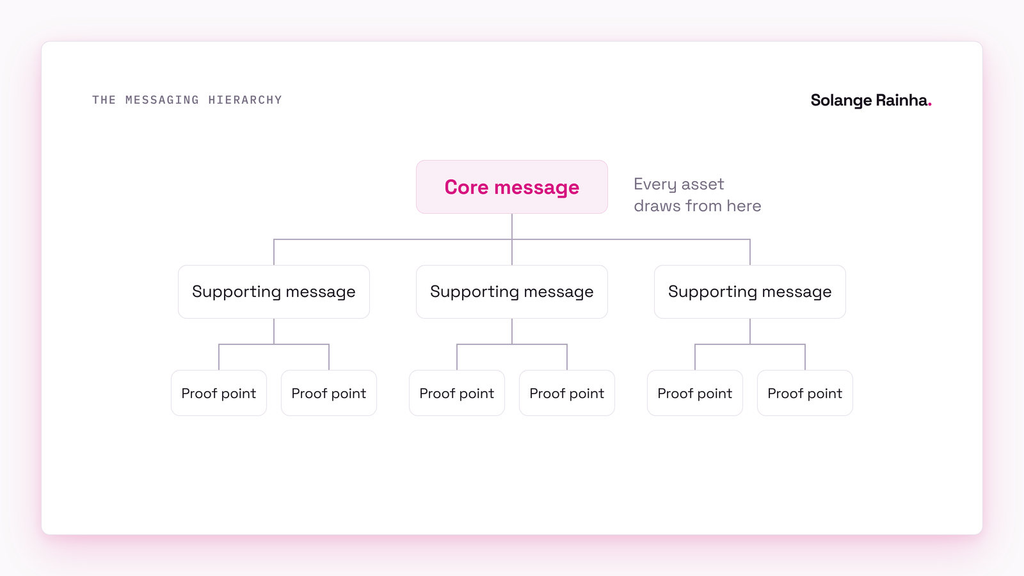
Then came the messaging hierarchy: the one core message everything ladders up to, the supporting messages beneath it, and the proof points under those. That’s what stops the improvisation problem, because when everyone knows the core promise and the structure under it, materials stop contradicting each other.
Voice and tone came last, because voice is how the positioning sounds when you say it, and you can’t define it until you know what you’re saying. I documented it properly, from how the brand speaks to what it avoids. It’s the same discipline I later applied as a first move at a B2B SaaS company in building editorial standards from zero, with one difference: editorial standards govern how you write, and brand voice governs who the writer is. You need both, and skipping the positioning step is a big part of why B2B content sounds the same.
That foundation took weeks before any of it showed outside, which is the hardest part of building a brand from scratch: the most important work produces nothing anyone can see.
Why start with social media when building a brand?
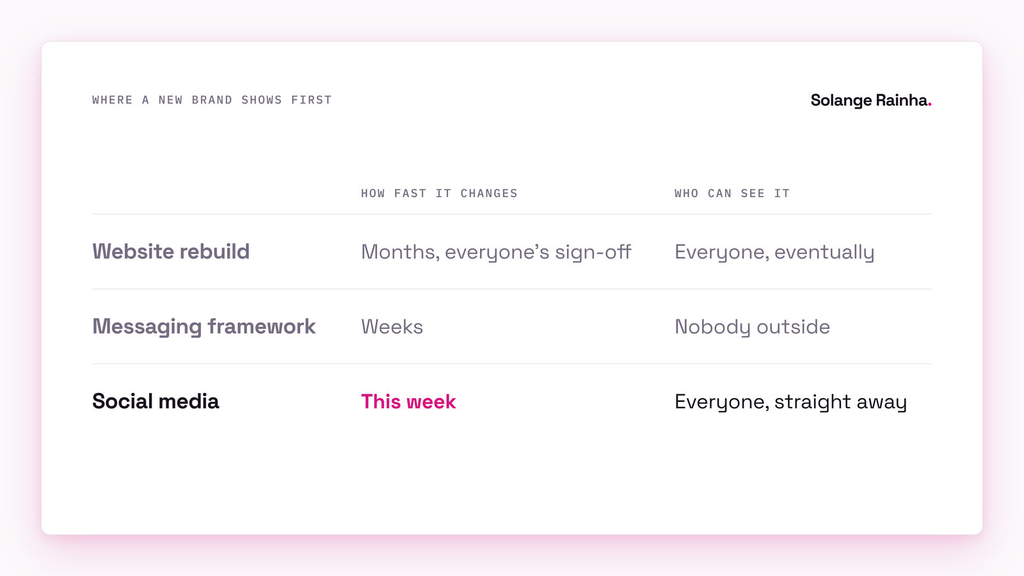
Because when you’re building brand positioning from scratch, social is the fastest visible proof the brand is alive. A website rebuild takes months and everyone’s sign-off, and a repositioned messaging framework is invisible to the outside world, but social you can change this week, and people can watch it change. That buys credibility and patience while the slower work happens underneath. Les Binet and Peter Field’s work for the IPA on long-term brand building makes the same point from the effectiveness side:
“No long term effects without short term.”
There’s a morale side to this that people underrate: when you join a place with a dead brand, everyone inside has quietly accepted that the marketing is bad, and fast, visible movement on social breaks that resignation. That counts as much internally as externally, because the organisation has to believe the brand is worth caring about before it’ll feed you the stories and access you need to keep building.
Social also let me test the new positioning and voice in public, cheaply and fast, so I could see what landed and what fell flat and adjust the voice before committing it to a website or a campaign that costs ten times as much to change. I’ve written up a pure social-channel turnaround in more tactical depth in the B2B social media turnaround; here, social was the opening move in a bigger brand build.
What do the 75% follower growth and 45% engagement figures mean?
Direction and velocity, off a small base, and the base deserves as much attention as the percentages. Growth percentages are the most abused statistic in marketing, so here’s the context. The account was small and stagnant when I started, and growing a small, dead account by 75% is easier than growing a large, healthy one by 5%. I won’t pretend otherwise, because anyone senior reading this knows it, and pretending would undercut everything else I’m claiming. What the figures show is that a dead channel became a living one, consistently, over about a year.
The more convincing proof was qualitative: engagement stopped being crickets and became conversation, and people started recognising the voice. During multi-day races, live coverage run with four freelance social media specialists pulled around three times the account’s normal daily impressions, which told me the content was reaching beyond the existing followers when it counted. Reach at peak moments is harder to fake off a low base, so that’s the figure I’d point to first, and the lessons from running it are in sports marketing lessons for B2B.
How does a newsletter build a brand?
It reaches people who chose to hear from you, in a format long enough to say something, with no algorithm in between. The newsletter became one of my most useful brand-building tools and it’s the one people overlook, because it isn’t flashy. I grew it to 2,500+ subscribers at a 35% open rate, above the 20.73% average for marketing campaigns in Brevo’s 2026 benchmark, though Apple’s Mail Privacy Protection inflates every open count, so I read it as a list that kept showing up for the brand, and leave the comparison there.
Every issue reinforced the voice and positioning and the relationship with readers, and people recognised the sender and wanted what was inside. It compounded with social too, which grew the reach while the newsletter deepened it. The list became the most reliable asset the brand had, because the readers were engaged and the brand owned it outright, out of any platform’s reach. The way I distributed through it on no budget is in content distribution on zero budget.
How fast can you change how people see a brand?
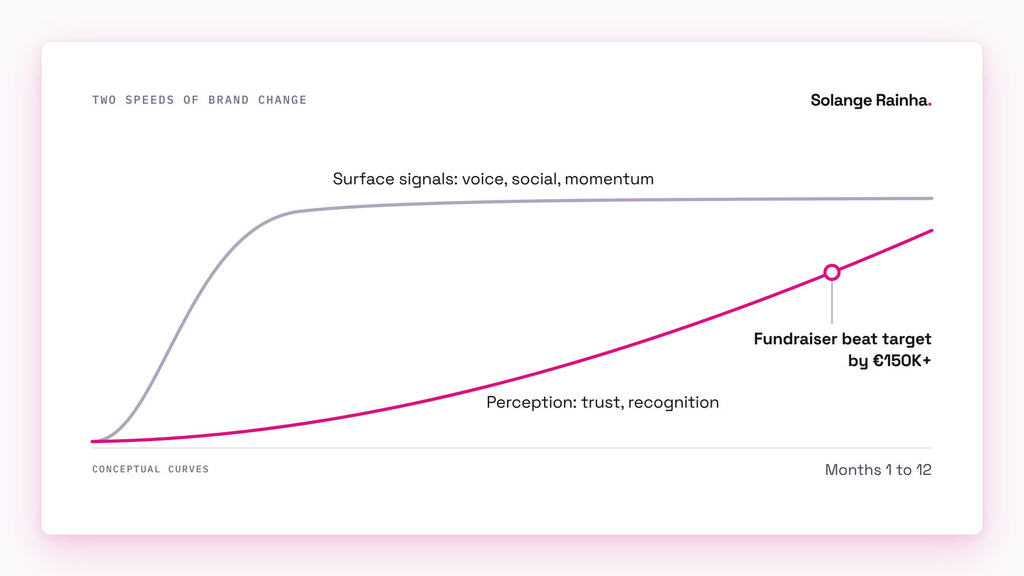
The surface moves in weeks; the perception takes many months and moves only with consistency. That’s more nuanced than either the “brands take years” crowd or the “growth hack it overnight” crowd will tell you. Voice, social presence and the feeling that someone competent was steering all shifted within weeks once the foundation was set, while trust and recognition (the sense that the brand stood for something specific) took many months, and only consistency moved them.
Jenni Romaniuk of the Ehrenberg-Bass Institute, who’s spent years studying distinctive brand assets, puts the building phase plainly in an interview with Contagious:
“Consistency of form is particularly important when you’re building assets.”
There’s a commercial case too, with a caveat: Lucidpress, a brand templating company, surveyed more than 200 organisations in 2019 and reported that consistent branding can lift revenue by up to 33%. It’s a vendor survey with no published method, so I treat it as directional. What I’d stake my own work on is the mechanism: recognition compounds only when the brand shows up the same way, repeatedly, over time.
So the mistake is declaring victory when the surface moves, because the surface is the easy part. The fundraiser my campaigns supported in that role beat its target by over €150K, and that result came late, after months of the brand showing up consistently, long after the social posts started looking better. How the campaign itself worked is in content strategy for fundraising.
Frequently asked questions
Building brand positioning from scratch splits into two timelines. The visible signals, voice, social presence, the sense that someone competent is in charge, can shift within weeks once the underlying foundation of positioning, messaging hierarchy, and voice is defined. The deeper perception of trust and recognition takes many months and depends entirely on consistency: showing up the same way repeatedly until recognition compounds. In my experience building a brand for an endurance sports organisation, surface momentum came fast, but the results that mattered, like a fundraising campaign that beat its target by over €150K, arrived late, after sustained consistency.
Strategy first, but not in a way that delays all visible work for months. Define positioning, messaging hierarchy, and voice before producing content, because everything you make has to ladder up to that foundation or it won’t hold together. Then start execution with the fastest, most visible channel, usually social media, both to test the new positioning cheaply in public and to show internal and external audiences that the brand is alive. The foundation is invisible work that produces nothing externally for weeks, so pairing it with quick social wins buys you the credibility and patience to finish the slower pieces.
Weak or nonexistent brand positioning shows up as a website that describes what a company does without explaining why anyone should care, social media that posts irregularly with no consistent voice, marketing materials that describe the company differently every time, and no defined voice or tone, so the copy sounds like whoever wrote it that day. The brand exists as a name, a logo, and a colour palette, but there’s no decided answer to who it’s for, what it uniquely offers, or how it sounds. Running a structured audit of these elements in your first two weeks gives you the map of the gap between what the brand is and what it needs to become.