A media property is a content operation with a defined audience, an editorial identity and a reason for people to come back, while a blog is a tab on your website that exists because the template had one. The gap between them is the difference between content that compounds into an owned audience and content that fills a calendar, and it counts for more now that B2B buyers settle their shortlists before contacting anyone and Google’s organic traffic to publishers fell by a third in the year to November 2025. Moving from one to the other is a positioning decision, and it costs time: it needs documented standards, recurring formats, a point of view or data of your own, and the patience to wait for metrics a CFO finds harder to read than a traffic chart.
Most B2B blogs are graveyards of forty posts with no through-line, each one reverse-engineered from a keyword some tool flagged as low-difficulty and published on a Wednesday because Wednesday was the slot. Nobody subscribes, nobody returns, and if you asked a reader what the blog is about they’d manage “our industry, roughly” before trailing off.
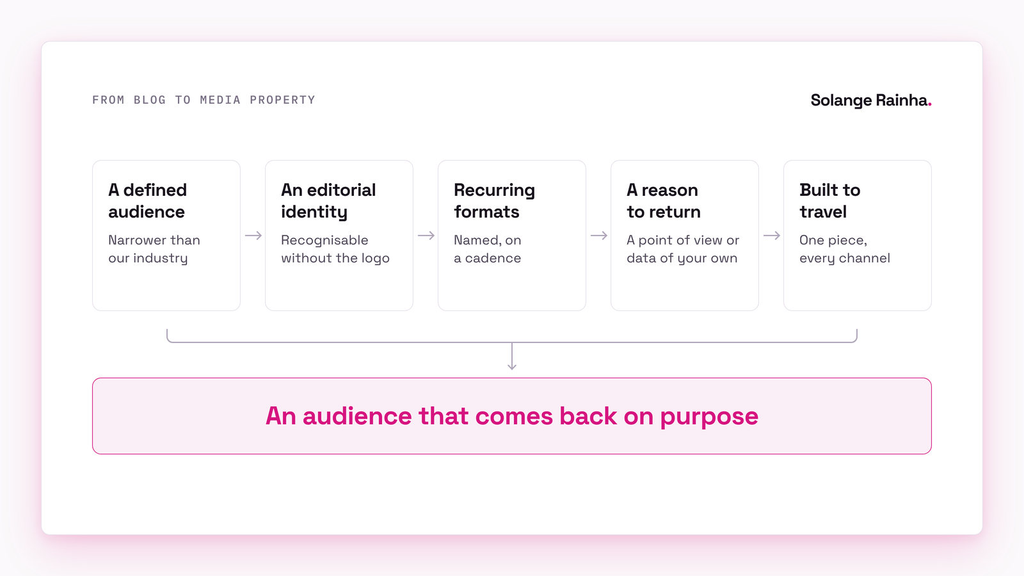
A publication works differently: it has a specific audience it serves, an editorial identity that makes it recognisable, formats readers learn to expect, and a reason to come back that doesn’t depend on Google sending them. Moving from one to the other is a positioning decision more than a production one, and it’s the most useful reframe available to a content team that’s tired of writing for keywords nobody reads.
What’s the difference between a blog and a media property?
Intent: a blog asks what should go out this month, while a media property asks who it serves and what those people need that nobody else is giving them, and everything downstream follows from which question you’re answering.
The gap shows in the structure: blogs organise around topics and keywords and publish whatever the SEO tool spits out, with the reader as an abstraction who arrives from search and leaves straight away, while building around an audience and a point of view means publishing what serves those people whether or not it ranks, and treating the reader as someone you want back next week.
| Blog | Media property | |
|---|---|---|
| Built to answer | What do we publish this month? | Who do we serve, and what do they need? |
| Organising unit | Keywords and topics | Audience and point of view |
| Reader | An abstraction who arrives from search | A person you want back next week |
| Success metric | Traffic, rankings, output volume | Return visits, subscribers, getting cited |
| Identity | Whatever the last brief said | Recognisable in three sentences, without the logo |
| How it dies | A graveyard nobody remembers | An audience that never shows up |
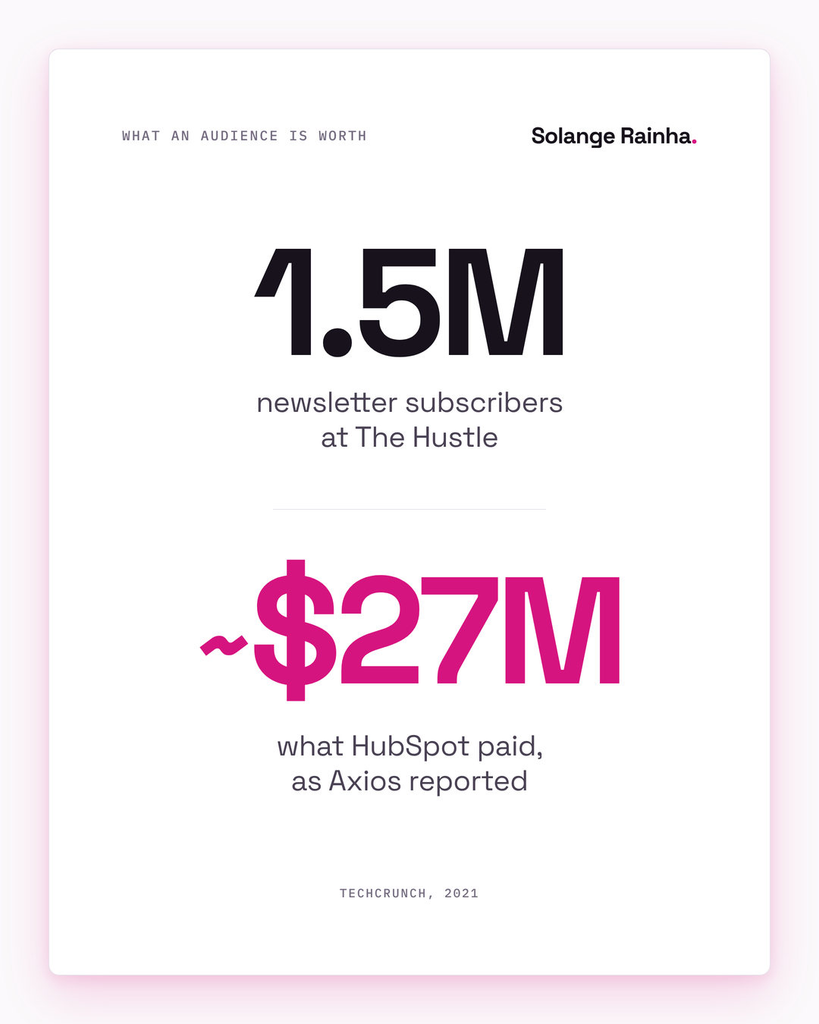
HubSpot made this argument with its money: in 2021 it acquired The Hustle, a newsletter with about 1.5 million subscribers, in a deal Axios reported at roughly $27 million, and HubSpot’s announcement predicted the next generation of tech companies would have:
“a media company embedded inside a software company”
A SaaS company paid eight figures for an audience it couldn’t build fast enough with a blog tab.
Why did chasing keywords stop working as a content strategy?
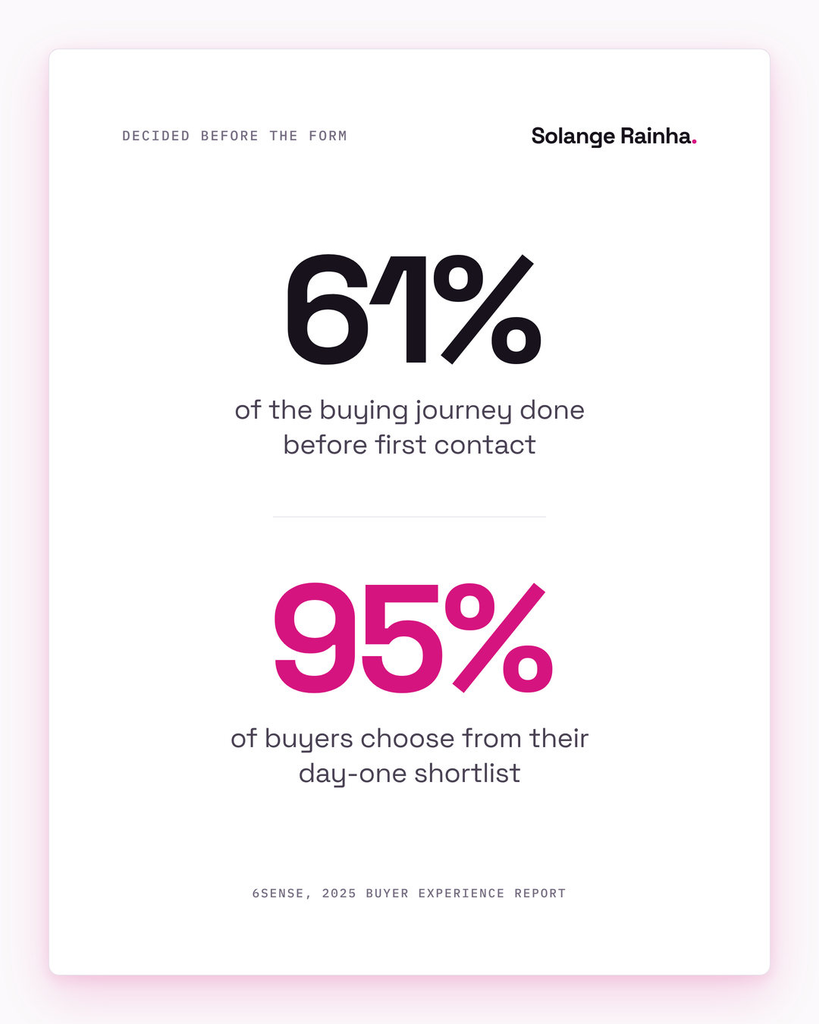
Because B2B buyers decide before they talk to you, mostly in places you can’t see. 6sense’s 2025 Buyer Experience Report, from nearly 4,000 buyers, found they first contact a seller 61% of the way through the buying process, and that they choose from one of the four vendors on their day-one shortlist 95% of the time.
Read that with your blog in mind. If the deal is mostly decided before anyone fills in a form, content’s job is to get you onto the shortlist while nobody’s watching, and a scattered library of keyword posts is terrible at that: it produces one anonymous visit from a search result and no memory afterwards. What gets you onto a shortlist is being a source someone reads regularly, trusts, and quotes to a colleague in a Slack thread you’ll never see, which is also why so much B2B content fails: it sounds the same as everyone else’s.
Search traffic also stopped being a reliable moat, which I covered in the case for sequencing SEO, AEO and LLMO. When AI answers absorb the informational click, the content that survives is the content people come to directly, on purpose, because they want what you make.
What does a publication need to bring readers back?
An identity readers recognise, formats they learn to expect, and a reason to return that a search result can’t supply on demand. A publication is recognisable: take the logo off and a regular reader still knows whose it is, because the point of view, the register and the standard of evidence hold steady. You document that consistency instead of leaving it to good taste, which is why building editorial standards from zero at a B2B SaaS company serving 200+ higher education institutions was the most strategic piece of work I did there.
Then come the formats. Where a blog publishes posts, a publication runs named properties on a cadence people anticipate: a monthly teardown of a campaign with the results attached, a recurring data drop from your own product usage, a standing interview series with practitioners in your category, an annual benchmark your industry starts citing.
The reason to return is usually a point of view, since most thought leadership contains no thought and no leadership and a position someone holds is rarer than it should be. Or it’s proprietary data, which is why original research is the one asset AI can’t copy: nobody can reconstruct your data from the open web, so you become the source others cite.
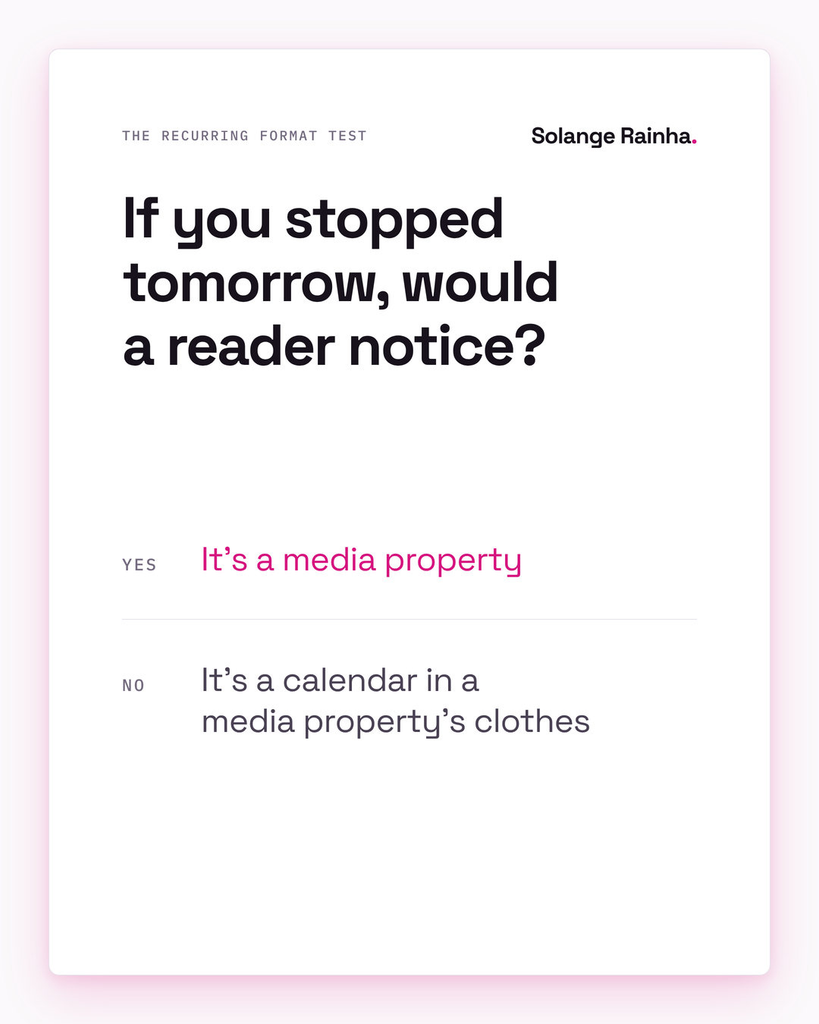
Here’s the test for a recurring format: if you stopped publishing it tomorrow, would a single reader notice it was gone? If not, you’ve got a content calendar with a media property’s name on it.
How do you design content to travel across channels?
You plan the reuse before you write, because distribution is most of the job when you have no budget and the piece itself is the raw material. Most blog posts get written, shared once on LinkedIn and abandoned, while editorial work built the other way is designed from the outset to be broken apart and redeployed.
That means the research behind one flagship article should also produce the LinkedIn posts, the newsletter section, the sales enablement one-pager, the webinar outline and the data point your CEO quotes on a podcast. The channel mix backs this up: in the Content Marketing Institute’s 2026 B2B research, marketers named LinkedIn (76%) and email newsletters (54%) as the two most effective channels for publishing thought leadership. I’ve written up the method in my content repurposing strategy, and it’s the practical reason I keep insisting you need a content system instead of a bigger content team.
Why does a media property compound when scattered SEO posts don’t?
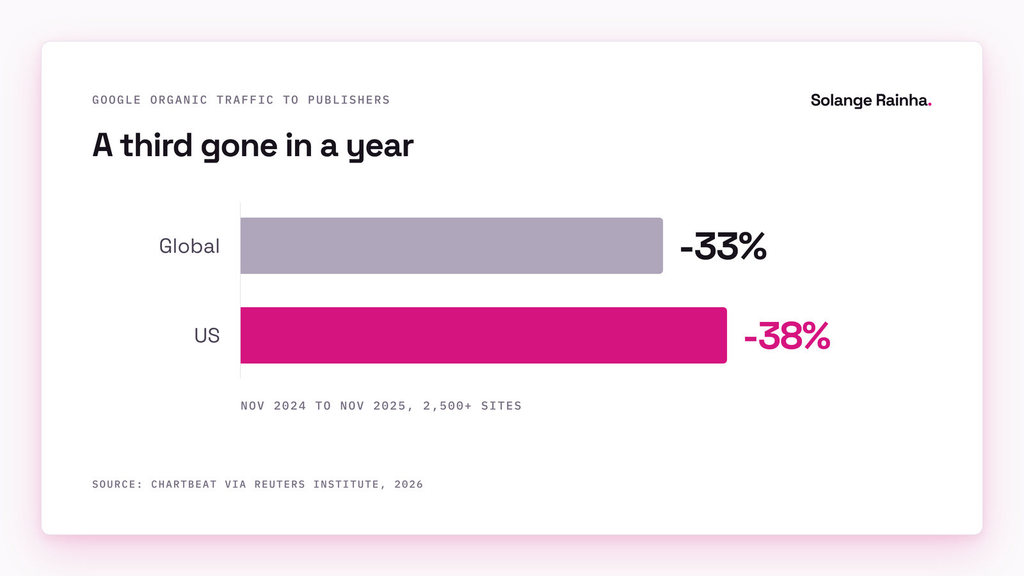
Because the asset is the relationship, and the relationship sits outside the algorithm. A ranking slips, an AI Overview eats the click, a core update lands, and traffic that took a year to build disappears in a couple of weeks. Publishers have seen it at scale: Chartbeat data in the Reuters Institute’s 2026 trends report showed Google organic search traffic to more than 2,500 sites fell by a third globally between November 2024 and November 2025, and 38% in the US, and the news leaders surveyed plan to build direct relationships with their audiences in response. I’ve dug into what that means for a company blog in organic traffic decline.
The property compounds because every issue of a newsletter makes the next one easier to open, formats people recognise get cited more, and original data turns you into the source others link to, which pulls in the authority that improves the search performance you weren’t chasing directly. When an audience knows your name, they search for it, and that shows up in your analytics as direct traffic nobody can attribute, even though it’s the most valuable demand you have; measuring that kind of visibility takes more than a referral report.
There’s a quality bar attached, and it’s the part teams underestimate: the whole model collapses if the writing is mediocre, because nobody subscribes to mediocre. That’s why I count writing quality as a competitive moat in B2B.
Where does the media property model fall short?
It’s harder than running a blog, and it takes longer to pay. It demands a defined audience, which means saying no to content that would rank but serve nobody you care about, and that’s a discipline problem before it’s a creative one. My content prioritisation framework exists mostly to make that no stick when a stakeholder outranks you.
The metrics that prove it’s working (return visits, subscriber growth, being cited, branded search) are also less legible to a CFO than a traffic chart. If your company needs pipeline in the next eight weeks, this is the wrong instrument, and you should say so at the start.
And it doesn’t replace search. The strongest content operations run both: search-driven bottom-funnel pages that catch buyers with intent, sitting alongside an editorial property that builds the preference that sends them looking in the first place, which is how I lay out a full-funnel content strategy. The mistake is investing only in SEO and ending up with a library of pages that rank for topics nobody remembers reading, which the blog tab lets you go on calling a content strategy.
Frequently asked questions
A blog is organised around keywords and topics, publishes whatever the SEO tool suggests, and treats the reader as an anonymous visitor from search. A media property starts from a defined audience and a point of view, runs recurring named formats on a cadence, and is built to bring people back on purpose. The practical test is whether anyone would notice if you stopped publishing.
Because B2B buyers make most of their decision before they contact you. 6sense’s 2025 Buyer Experience Report found buyers first contact a seller 61% of the way through the buying process and choose from their day-one shortlist 95% of the time. Scattered keyword posts produce anonymous visits with no memory attached, while a publication builds the ongoing relationship that puts you on a shortlist in channels you can’t track.
It needs a defined audience narrower than “our industry”, documented editorial standards that keep the identity consistent across writers, recurring named formats on a reliable cadence, a point of view or proprietary data that gives people a reason to return, and a reuse workflow so each piece feeds LinkedIn, the newsletter and sales enablement. Quality is the entry fee, because nobody subscribes to mediocre.
No. The strongest content operations run both: bottom-funnel search pages that catch buyers with active intent, alongside a publication that builds the preference that sends buyers to search in the first place. The mistake is investing only in search, which leaves you with a library of pages that rank for topics nobody remembers reading, at a time when Google organic traffic to publishers fell by a third in a single year.