I’d test a new vertical (an industry or market segment you don’t sell to yet) with one guest post on a partner’s blog that argues one idea. I’d only ask for budget once the results show that readers in that market care.
We already know that moving into a new vertical costs a lot, but most teams still test it with a partnership that needs contracts and months of waiting. A guest post on a partner’s blog is the cheapest way I know to test a new vertical: for about a day of writing, it tells you whether people in that market care about your idea. The signals I’d agree on up front are referral traffic (the visits that reach your site from the partner’s), plus signups, replies, sales conversations with prospects and AI mentions (AI tools naming you in their answers).
Why test a new vertical with a guest post instead of a partnership?
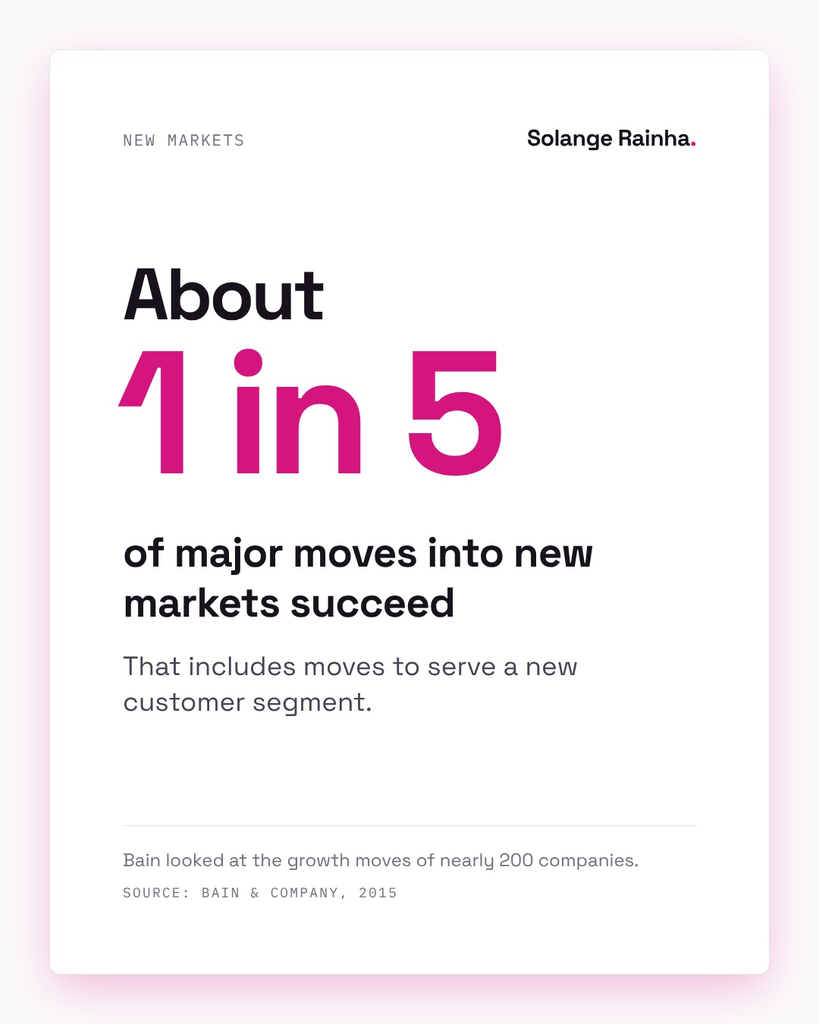
A new vertical means selling to buyers you don’t know yet, and most moves like that fail. In a 2015 piece for Bain & Company, Chris Zook put the odds of success for major adjacency moves (moves into a market next to the business you already have) at about 20% across nearly 200 companies. Serving a new customer segment is one of the six moves he describes. A partnership is a fair way to commit once you know the market wants you, but it takes a long time to tell you whether it does.
The buyers in that vertical are also deciding without you: the 6sense 2025 Buyer Experience Report found the winning vendor was already on the day-one shortlist 95% of the time. You need to reach those buyers while they’re still reading, and a partner’s blog is somewhere they already read. The table below compares a partnership test with a guest post test.
| Partnership test | Guest post test | |
|---|---|---|
| What it costs | You pay for contracts and legal review, and often a revenue share. | You pay for one guest post, plus the hours you spend asking the partner to publish it and editing it. |
| Who it needs | Each company needs someone who owns the partnership, and Sales and often Product give time too. | You and the partner’s editor do most of the work, with one salesperson ready for follow-up. |
| How long it takes | A first answer usually takes a quarter or more. | A first answer comes four to six weeks after the piece goes live. |
| What you learn | You learn whether a joint offer sells. | Replies and signups show whether the vertical’s readers care about your idea. |
| What stays unknown | The partner’s brand brings a lot of the demand, so you can’t see how much is yours. | The test can’t show whether the vertical’s readers will buy, or at what price. |
How do you pick a partner whose readers match the vertical?
Who reads the partner’s blog counts for far more than its domain authority (the score SEO tools give a site for how many other sites link to it), because the test only works if those readers are the people you’d sell to. I build personas from sales conversations (profiles of the people who buy), so I’d start there: ask Sales which job titles in the new vertical they’ve spoken to, and which newsletters or blogs those people mentioned. At EVA Global, one generic message reached none of our eight eMobility (electric transport) buyer types, so I’d rather have a small blog that people with the right job titles read than a big one that everyone reads.
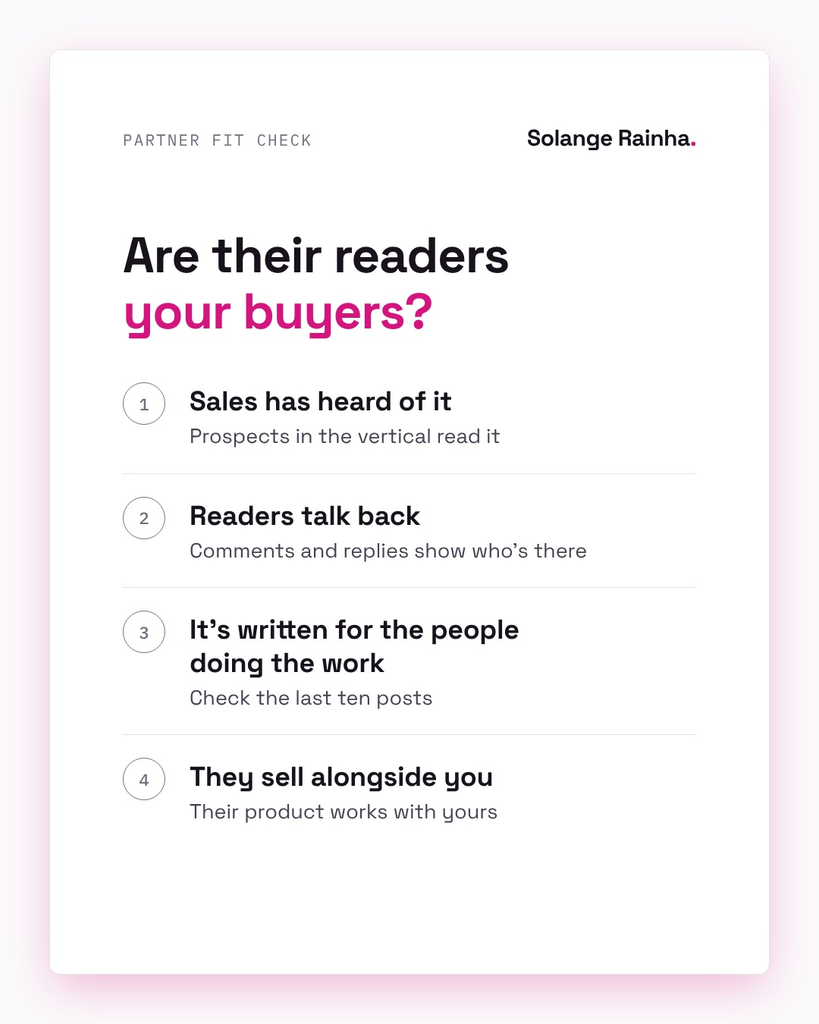
Before I asked any partner to publish a piece, I’d check four things about them:
- Look at who comments on posts or replies to the newsletter, since that’s the closest you’ll get to seeing the readers.
- Check who the last ten posts are for: the people who do the work, or the vendors who sell to them.
- Make sure their product works alongside yours instead of competing with it.
- Find out whether they publish guest posts at all, and how recently they did.
How do you ask a partner to publish your post, and what do they get out of it?
An editor says yes when they can see why their readers would want the piece, so lead your email with the reader and the idea, and put the link back to you last. Orbit Media’s 2026 blogging survey of 1,042 content marketers found guest blogging fell 29% in a year, the biggest drop of any tactic it tracks. My read is that editors are getting fewer guest post ideas worth publishing, so a well-argued one has a better chance than it used to.
Give the partner what their readers can’t find elsewhere, like a figure from your own customers or a step-by-step breakdown of a process the vertical runs every week. Original research gets attention on your own blog because readers can’t find it elsewhere either. Offer to send the piece to your company’s email list and post it from your company page, with the same zero-budget distribution I use for my own content. In the email, ask them to share how many of their readers clicked through to you and how many opened the newsletter, a month after publishing, because you can’t judge the test if you only see your half of the data.
What should the guest post actually test?
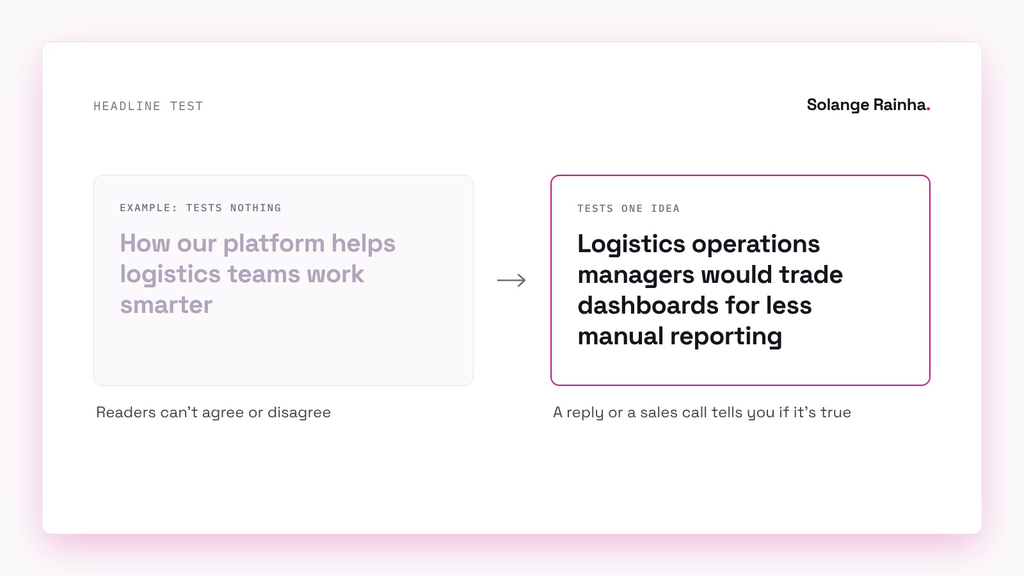
A general introduction to your company can’t test anything, since readers who don’t care and readers who haven’t noticed you yet behave the same way. The piece needs one idea you could be wrong about, and you should write it as a sentence, such as “operations managers at mid-size logistics companies care more about cutting manual reporting than about real-time dashboards”. If readers in that vertical reply to you or bring the idea up on a sales call, the idea convinced them.
Eric Ries’s 2009 definition of a minimum viable product describes what the piece is for:
“the maximum amount of validated learning about customers with the least effort”
Ries wrote that about products, and a guest post gives you that kind of learning about a new vertical for the effort of one piece. Put the idea in the headline and the opening, and argue it with your own evidence. One call to action at the end (the step you ask readers to take) gives readers who agree something to do, like a template or an invitation to reply.
What do you measure, and what counts as a result?
I agree on the signals before the work starts, because picking them afterwards looks like you picked whatever made the result look good. For a guest post test, I’d write down the five signals and the target for each one before the piece goes live, and I’d set each target to fit the size of the partner’s audience.
| Signal | Where I’d track it | What it tells you | What to decide before publishing |
|---|---|---|---|
| Referral traffic | GA4 (Google Analytics 4) tracks it, as long as every link carries a UTM tag, which is a label that tells analytics where a visit came from. | You’ll see whether people read the piece and clicked through. | Decide how many visits count as interest for this partner’s audience. |
| Signups by source | HubSpot or your CRM (the system that stores your contacts and deals) records them, along with the source of each person’s first visit. | Signups show whether readers wanted more from you. | Pick how many signups from this one source would count as a result. |
| Replies | Watch your inbox and anything readers post in reply on the partner’s site. | A reply shows the idea started a conversation. | Agree on which replies count, like a question about your product. |
| Sales conversations | Add a “where did you hear about us” field to every sales call. | Sales calls tell you whether anyone in the vertical wants to talk. | Set how many conversations you need within six weeks. |
| AI mentions | Run a fixed set of buyer prompts (questions a buyer would type into an AI tool) before and after the piece goes live. | AI answers show whether the tools start naming you when the vertical’s buyers ask questions. | Write down which prompts you’ll use and when you’ll run them. |
The sales-call field is the one I’d insist on, since none of the 17 KPIs (key performance indicators) I reported every quarter at Full Fabric tracked where buyers first heard of us. Looking back, a required field on sales calls would have been the cheapest source of that answer, which is why I now keep a tracker of where buyers say they heard of us.
AI mentions are the slowest signal and the one most teams skip. Ahrefs’ 2025 study of 75,000 brands found brand web mentions (any mention of a brand’s name on other sites) had the strongest correlation with appearing in Google’s AI Overviews, the AI answers at the top of Google results. The correlation was 0.664, against 0.218 for backlinks (links from other sites). The study only shows a correlation, but it’s a good reason to value a mention on the right site above the link.
In my current role, I run 20 buyer prompts through ChatGPT, Perplexity, Claude, Gemini and Google AI Overviews. In the first round, which I use as my starting point, the AI tools named the company I work for in 38% of answers and cited it as a source in 37%. Naming is just your brand being there, whereas a citation includes a link to your site. For a vertical test, I’d write five to ten of those prompts for the vertical’s buyers, then run them before publishing and again a month later.
How do you read a weak result fairly?
Read a weak result carefully before you drop the vertical, because the partner or the piece can fail even when the vertical cares. I’d check the partner first: did the piece go out in their newsletter, or did it only appear on the blog? Then I’d check the piece: did the headline state the idea, and would a reader in that vertical actually want the call to action? In my current role, I only make a claim when two of the four signals I use to track AI search rise together, and I’d use the same rule here.
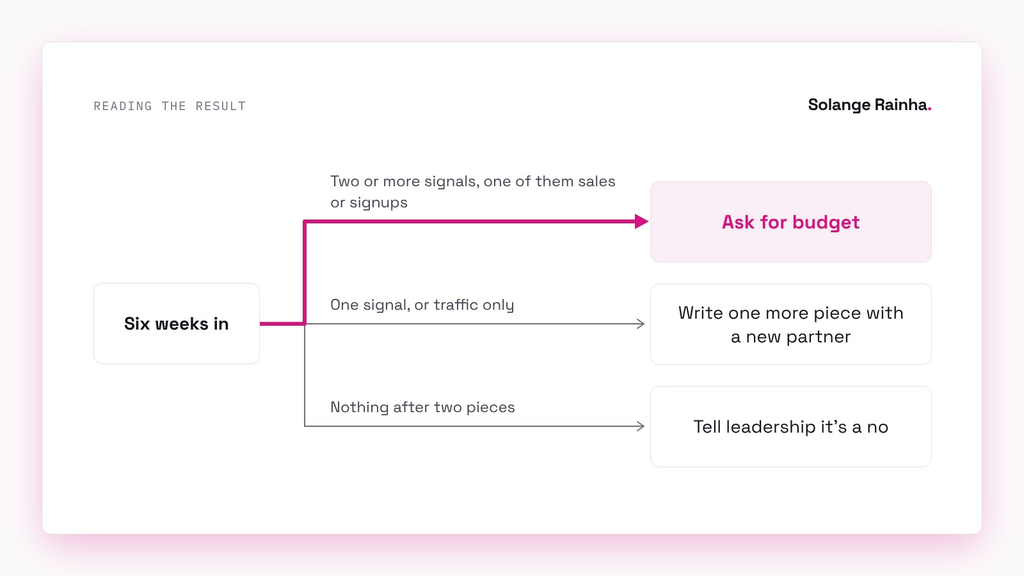
If the partner or the piece looks like the problem, I’d write one more piece with a new partner and a clearer headline. If two pieces get no replies and no sales conversations, I’d take that as the answer and tell leadership plainly, because two pieces cost a lot less than a partnership. A guest post test also has a limit with small verticals, because they may not send enough traffic for the results to mean much.
When does a good result justify a full investment?
A good result means two or more signals hit the target you set before publishing, and one of them has to be a sales conversation or a signup, because traffic and AI mentions show interest without showing intent. I’d then ask for budget the way I asked for a brand rebuild at EVA Global, by showing what it would cost in time and money alongside the evidence. The request usually covers a content plan for the vertical’s main personas (with more partners to publish it) and a named salesperson. I’d price each part with the content prioritisation framework so leadership can see which other work it would delay.
Once leadership agrees to the budget, Sales should decide the order you build the content in. When leadership at Full Fabric moved the primary buyer to IT, I wrote the new content in the order deals were stalling. I’ve written up how I rebuilt the content strategy for that change of buyer, and the decisions behind it are on my results page. New pages take a while to rank, so set expectations with a realistic content timeline.
Are you testing a new vertical right now? I’d like to hear what you’re measuring, at [email protected] or on LinkedIn.
Frequently asked questions
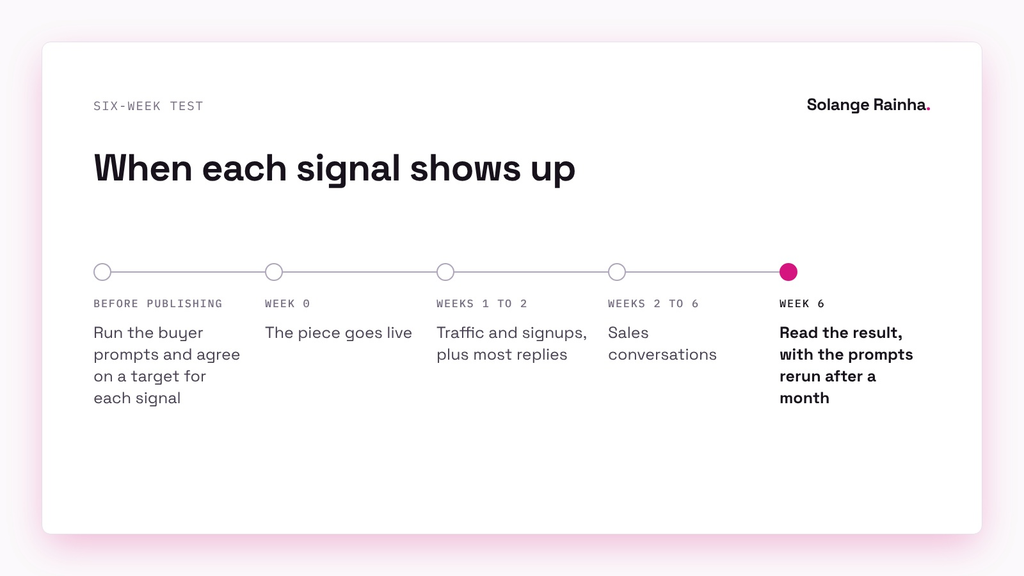
A guest post test for a new vertical takes about six weeks from the day the piece goes live. Referral traffic and signups show up in the first two weeks, and so do most replies, while sales conversations and AI mentions take longer. Before the piece goes live, add a few weeks to ask the partner and edit the piece, and let their schedule set how many.
One guest post is enough evidence to ask for a bigger test, but not enough to commit a full marketing and sales budget. The post shows whether the vertical’s readers care about your idea, and it can’t show whether they’ll pay. If two or more signals hit the target you agreed on before publishing, use that to fund a plan with more partners and a named salesperson.
A partner saying no usually means your email led with your company instead of their readers. Rewrite the email around one idea their audience would argue about, and offer a figure from your own customers they can’t get elsewhere. If two or three good partners still say no, that tells you something about how people in the vertical see what you sell.
Tracking AI mentions from a guest post means running five to ten buyer prompts for the vertical through AI tools like ChatGPT and Google AI Overviews, once before publishing and again about a month later. Write down whether each answer names your brand and whether it cites your site. Make sure to use the same prompts both times, so any change comes from the piece and not from changes to the prompts.
A guest post should link to one page you’ve built for that vertical’s readers, such as a template or a short page that picks up the idea from the article. Add a UTM tag to the link so GA4 shows which visits came from the partner. Sending readers to your homepage makes signups by source much harder to read.
Guest posting is worth it for audience and AI visibility more than for links. Ahrefs found in 2025 that brand web mentions correlated far more strongly with appearing in Google’s AI Overviews than backlinks did. Pick partners for who reads them instead of for their domain authority, because those readers are what the test needs.