Content distribution is the work of getting a finished piece in front of the right people, and most advice on it quietly assumes a paid budget you don’t have. This is the zero-budget playbook I actually ran as a team of one: turning LinkedIn presence into a distribution engine, using email as a routing channel rather than a monthly blast, getting sales to share, and making internal stakeholders my reach. It’s for solo marketers and small teams who’ve published something good to complete silence.
You published the best piece of content you’ve written all quarter, it got 40 views, and half of them are yours. Nothing converted, nobody shared it, and it went so quiet you started wondering whether the writing was any good. The writing was probably fine; distribution let it down, and almost every article on content distribution for B2B SaaS assumes you can throw money at the problem: paid social, sponsored newsletters, syndication, a promotion budget. When you’re a team of one with zero paid spend, that advice is useless. I’ve been that team of one at three B2B companies, with no ad budget and no promotion line, and the reach still had to come from somewhere.
Fret not, though: the highest-reach channels open to a broke solo marketer are the ones money can’t buy, because what powers them is people showing up. Ross Simmonds, who built his agency Foundation around content distribution, has a line for the usual imbalance between 20 hours of creating and almost no time promoting, from an Inspired Insider interview in 2024:
“You are doing a disservice to yourself to only spend 20 seconds promoting it.”
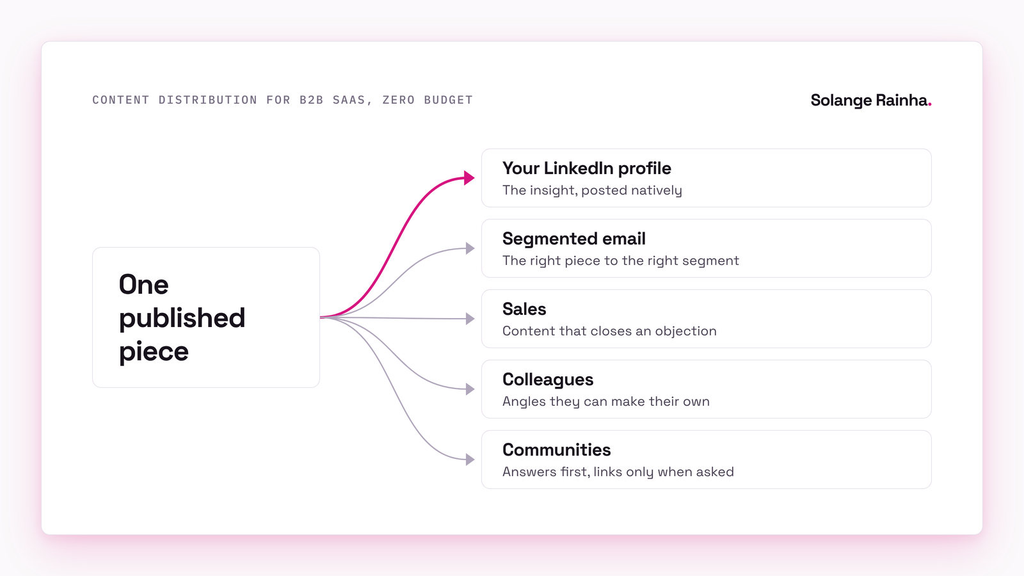
Why does most advice on content distribution for B2B SaaS assume a budget?
Because a lot of it comes from companies that sell paid tools, and paid channels are easier to write about than the human work behind zero-budget reach. Syndication platforms, ad networks and promotion tools all have content teams with a reason to frame distribution as a spending problem, and it usually isn’t one, at least not at first.
Most B2B teams have no spare budget anyway: Gartner’s 2025 CMO Spend Survey found marketing budgets flat at 7.7% of company revenue, with paid media taking 30.6% of the budget, and the 2026 edition barely moved it, to 7.8%. The upside is that buyers are spread across more places than ever: McKinsey’s 2026 B2B Pulse survey of nearly 4,000 decision-makers found they use an average of ten channels, so there are plenty of free surfaces to reach them on if you know which ones pay off.
Why is your LinkedIn profile your biggest free distribution channel?
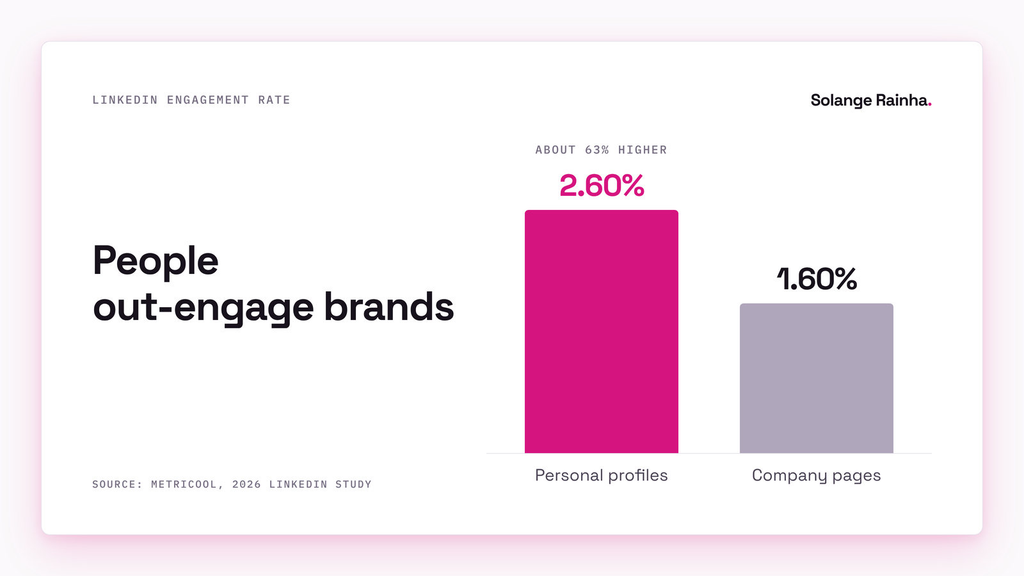
Because LinkedIn rewards people over brands, and your profile is the one channel you control that the platform favours. Metricool’s 2026 LinkedIn study of 673,658 posts from 63,108 accounts found personal profiles averaged a 2.60% engagement rate against 1.60% for company pages, about 63% higher, so the biggest untapped distribution channel for most teams is getting humans posting, starting with whoever runs content.
When I was the sole content person at a B2B SaaS company serving 200+ higher education institutions, I ran the company LinkedIn like it had to earn every impression. Posting 39+ times a quarter across concurrent campaigns, I took LinkedIn impressions up 50% and kept engagement rates above 12%. Every blog post went out as a native LinkedIn post that carried the insight and stood on its own, with no “check out our new post” link-drop, because a post that only exists to send people elsewhere gives LinkedIn and the reader no reason to stay.
The company page got me reach, but the ceiling is lower there, and everything below about internal advocacy is the same idea pointed at your colleagues. If you have any room to build a presence in your space, that’s the channel with the most headroom, as long as the posts carry work you can show, which is the line I draw in why personal branding is overrated.
Where should the link to your article go on LinkedIn?
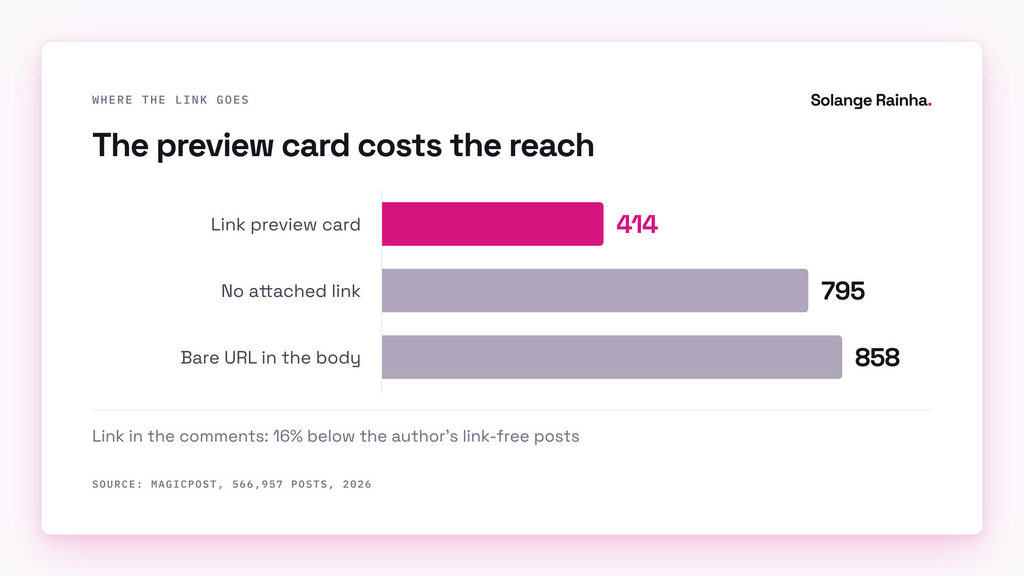
In the body as a plain URL, or nowhere, because the reach penalty in 2026 sits mostly on the link preview card. I used to tell people to drop the link into the first comment, and the data has moved since I wrote that: MagicPost, which sells a LinkedIn posting tool, found in 566,957 posts that posts with an attached link card had median impressions of 414 against 795 for posts without one, a bare URL in the body held up at 858, and in a same-author comparison posts pointing to a link in the comments sat 16% below that author’s link-free posts.
Metricool’s data points the same way for people: links cut impressions on personal profiles by 27% against their average, while on company pages posts with links did better than average. So post the insight natively to earn its reach on its own, add a plain link only if the reader needs the full piece, and accept that anyone who wants it will find it. It’s the same discipline behind running content as a solo operator across several audiences, which I’ve written about in the multi-persona system piece, and I’ve laid out the posting routine in social media from scratch.
How do you use email as a distribution channel?
You route each piece to the segment that needs it, because email is the one channel you own outright and no algorithm can throttle. Treating it as more than a monthly newsletter is where the reach hides.
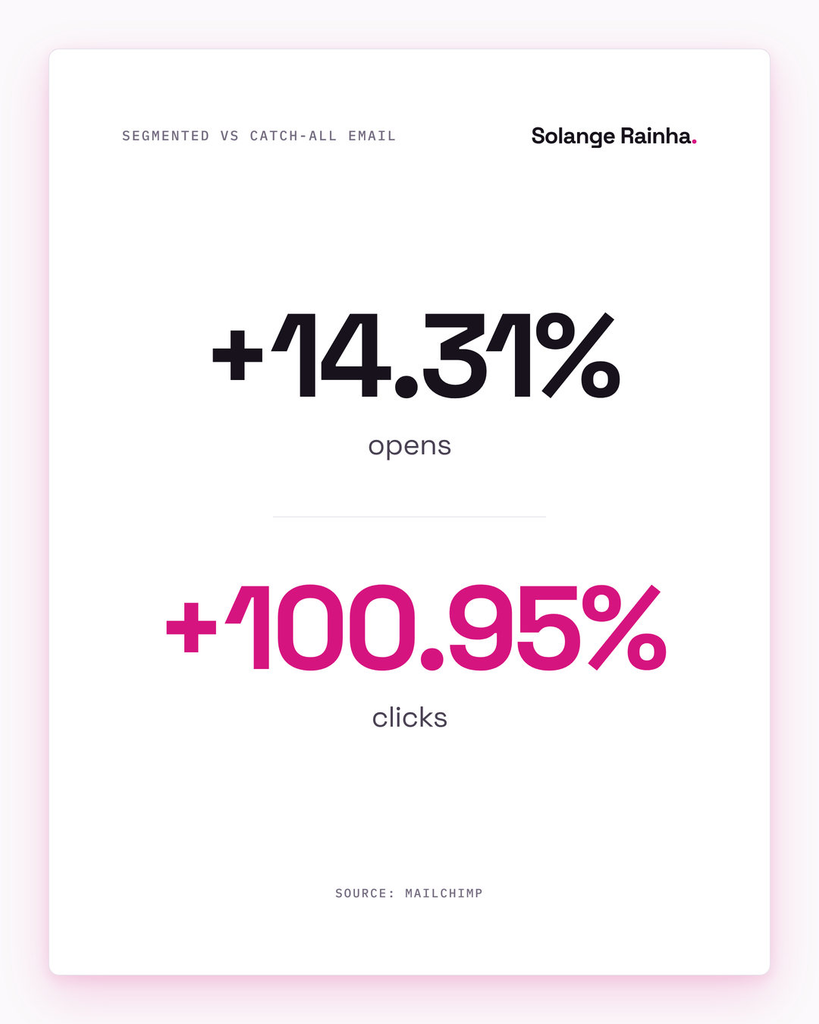
At a global ultra trail running championship where I was the sole marketing lead, the newsletter went to 2,500+ subscribers at a 35% open rate, and I put that down to segmenting the content so each send was relevant instead of a catch-all. Mailchimp’s segmentation data shows the size of that effect: segmented campaigns earned 14.31% more opens and 100.95% more clicks than unsegmented ones. The logic carries straight into B2B: a piece on technical evaluation goes to the segment that asked technical questions, a strategic piece goes to leadership, and a case study lands with prospects mid-evaluation. I’ve covered the full email setup in B2B email campaigns that convert.
Beyond the newsletter, email distribution means the one-to-one sends nobody counts as marketing: a relevant post forwarded to a prospect a rep is mid-deal with, a piece slotted into the onboarding sequence, or the support question you answer by sending the article that solves it. Each send reaches fewer people, but with near-perfect relevance.
How do you get sales to share your content?
You make content that helps salespeople close, because sales already has the audience you’re trying to reach. Turning content into material reps want to send is the highest-return distribution move a solo marketer can make.
That means content mapped to what sales needs mid-deal: a piece that handles a common objection, a comparison that helps a prospect justify the decision internally, the one-pager every buyer asks for at stage three. When I produced sales enablement materials, the ones that got used were built around a specific moment in the sales conversation, and the marketing-theme pieces sat there untouched. The appetite is there: DSMN8, which sells an employee advocacy platform, found in its 2026 benchmark that salespeople are the most active participants in advocacy programmes, at 33% of all activity.
Here’s the split between distribution that works and distribution that dies on the vine, from what I’ve run:
| Approach | What it looks like | Why it works or doesn’t |
|---|---|---|
| Link-drop to the team | “New blog post, please share!” in Slack | Dies: no context, no reason, nothing in it for the sharer |
| Enablement-first | A piece that closes an objection, handed to the rep mid-deal | Works, because the rep shares what helps them hit quota |
| Brand-page reliance | Posting only from the company page | Weak: personal profiles earn about 63% more engagement |
| Native personal post | The insight posted natively, a plain link only if needed | Works: it earns reach without the link card’s penalty |
| Catch-all newsletter | Everything to everyone, monthly | Weak: relevance drops, and opens and clicks go with it |
| Segmented routing | The right piece to the segment that needs it | Works: segmented sends doubled clicks in Mailchimp’s data |
How do you turn colleagues into a distribution network?
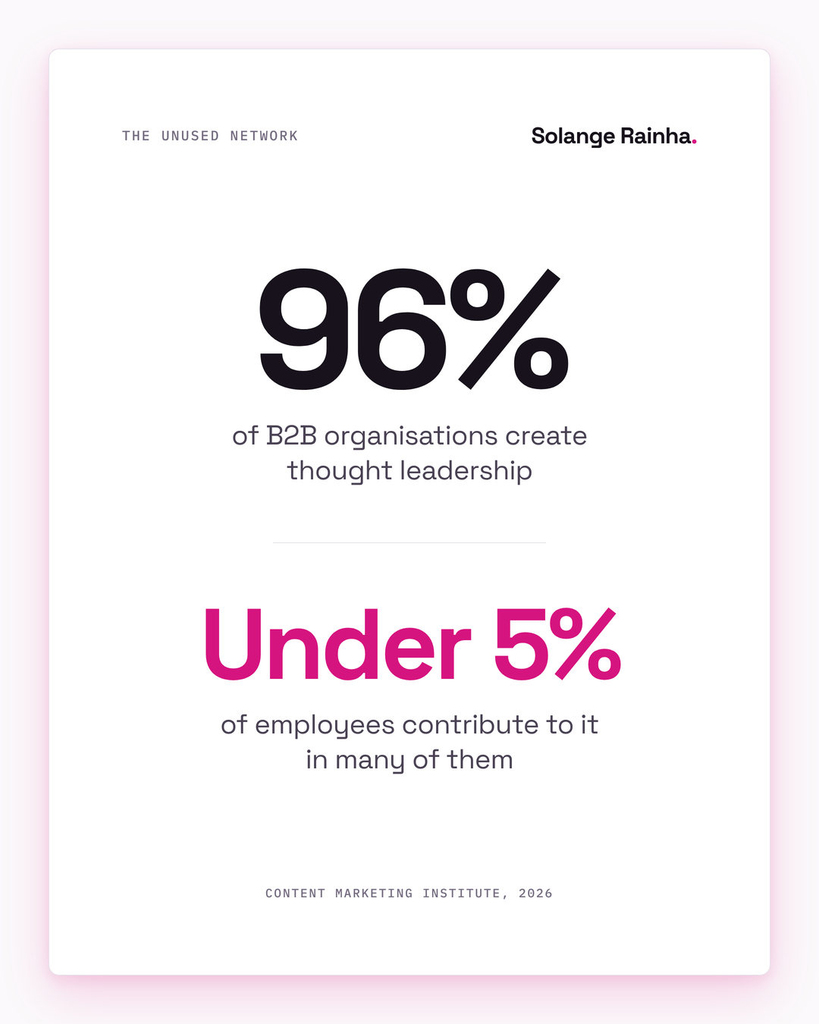
You make sharing effortless and personal, because every colleague with a LinkedIn profile is a distribution route you already have for free, and most companies barely use it. The Content Marketing Institute’s 2026 B2B research, a survey of more than 1,000 B2B marketers, found 96% say their organisation creates thought leadership, while in many of those companies fewer than 5% of employees contribute to it.
The mistake is asking people to post identical, robotic copy, which they hate and their networks ignore. What worked for me was writing three or four suggested angles per piece so a colleague could pick the one that fit their voice, and tagging the specific people whose expertise the piece drew on so they had a reason to share.
It’s cross-functional work, and the same muscle as building a content system instead of relying on a content team: your distribution network is people, and people push what they’ve got a stake in.
How do you seed content in communities without being spammy?
You show up where your buyers already gather and answer questions first, which only works if you’re a participant and never a drive-by link-dropper. When I ran the campaigns behind a fundraiser that beat its target by over €150K, the reach came from freelancers plugged into running and endurance communities across four countries, so the content had somewhere to land, a pattern I break down in sports marketing lessons for B2B.
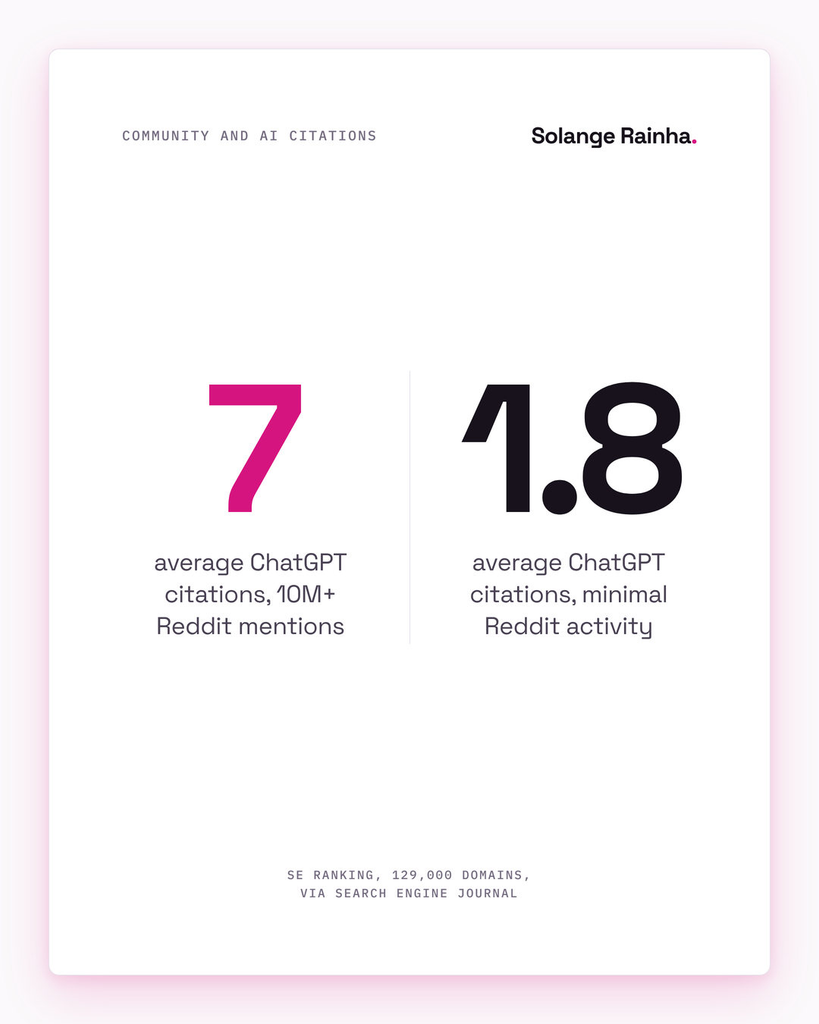
The same applies in B2B: answer questions in the industry Slack or subreddit where your buyers hang out, and reference your content only when it answers the question being asked. Community presence feeds AI answers too: in an SE Ranking study of 129,000 domains, reported by Search Engine Journal, domains with over 10 million Reddit mentions averaged 7 ChatGPT citations against 1.8 for domains with minimal Reddit activity, which ties community seeding straight to the AEO work I’ve written about.
What would I spend money on first if I got a budget?
Amplifying the one or two pieces that already earned traction for free, instead of paying to promote everything. If a post is pulling shares and comments with zero spend, a small paid push behind that specific piece compounds a signal the audience already sent, while forcing reach onto content nobody has validated mostly buys expensive silence.
Next would be an employee advocacy tool to take the friction out of internal sharing, because the manual version works but eats time. What I wouldn’t do is spend first and build distribution habits second: the scrappy channels have to work on their own before paid money makes sense. The same rule held when I ran product launch content on zero budget, and measuring which channel drives outcomes is its own discipline, covered in the content marketing metrics I report.
Where does a zero-budget playbook fall short?
It’s slow and it runs on your time: every route here depends on people, so it scales with your hours and your relationships, and a team that needs reach in two weeks for a launch can’t wait for a community presence to mature. The platform data also moves fast: the LinkedIn link advice above changed inside a year, so treat any single tactic as a setting to retest every few months, while the principle, that people beat spend at zero budget, holds steady.
Frequently asked questions
Content distribution for B2B SaaS is the work of getting a finished piece of content in front of the specific people it was written for, through channels like LinkedIn, email, sales conversations, internal advocacy and community participation. It’s separate from creating the piece and from paid promotion, which buys reach. For teams without a budget, distribution runs on owned and earned channels: your own social presence, your email list, your colleagues’ networks and the communities your buyers already belong to.
You use the channels that run on people. For a solo B2B marketer, the highest-return ones are a consistent personal LinkedIn presence posting native content, segmented email that routes the right piece to the right people, sales enablement material reps want to send, colleagues sharing in their own words, and participation in the communities where buyers gather. These cost time rather than money, and on LinkedIn alone personal profiles earn about 63% more engagement than company pages, according to Metricool’s 2026 study.
LinkedIn favours people over brands, and audiences do too. Metricool’s 2026 study of 673,658 posts found personal profiles averaged a 2.60% engagement rate against 1.60% for company pages. For a solo marketer with no ad budget, posting the insight natively from a personal profile is the strongest free move available, with one 2026 caveat: link preview cards cut reach sharply, and links in the comments now underperform too, so use a plain URL in the body or no link at all.
Eventually, but not first. Paid distribution works best as an accelerant on content that has already earned traction organically, and it can’t replace distribution habits you never built. Spend the first budget amplifying the one or two pieces already pulling shares without spend, and on tooling that takes the manual grind out of internal advocacy.